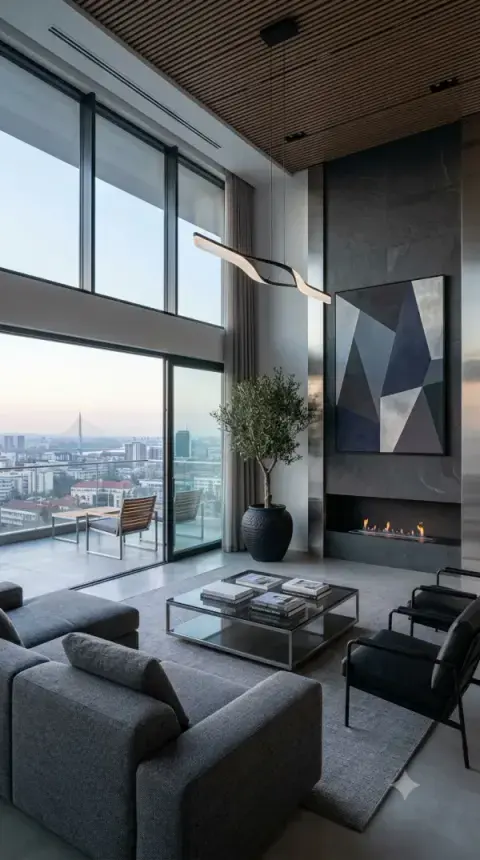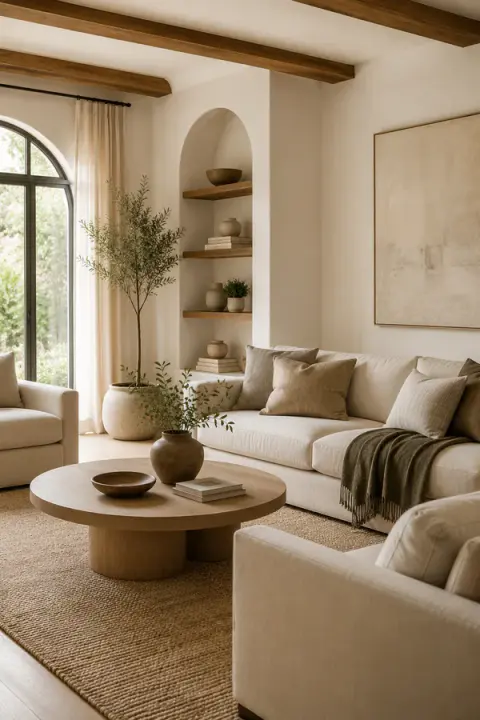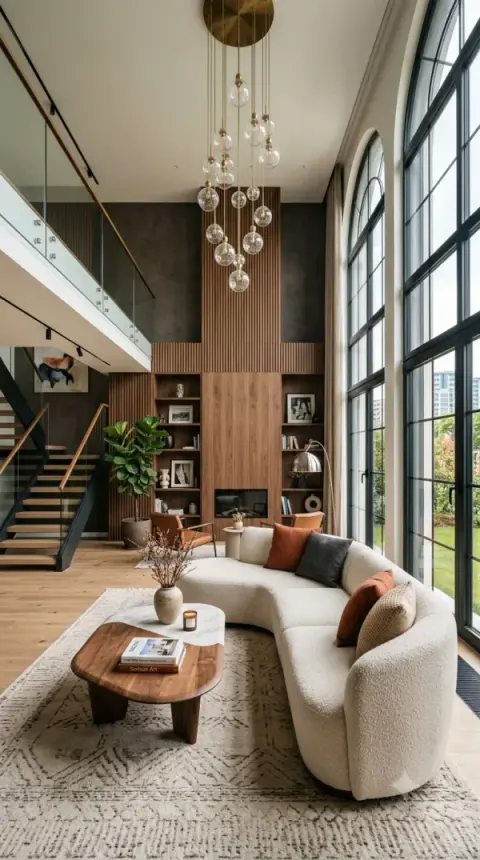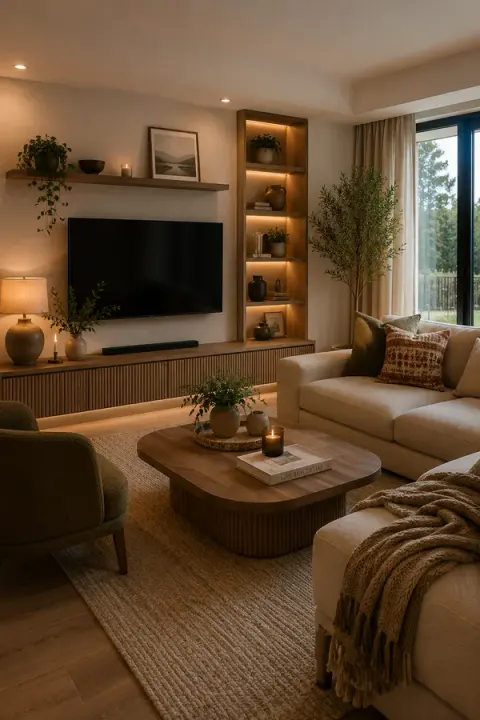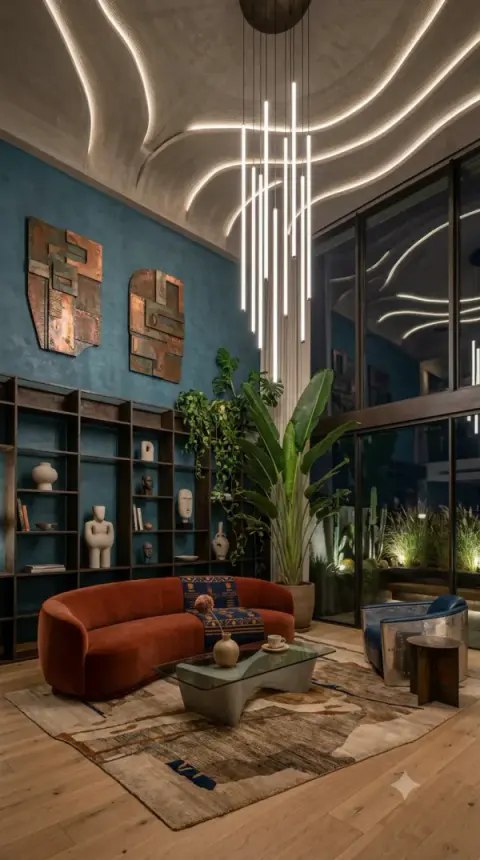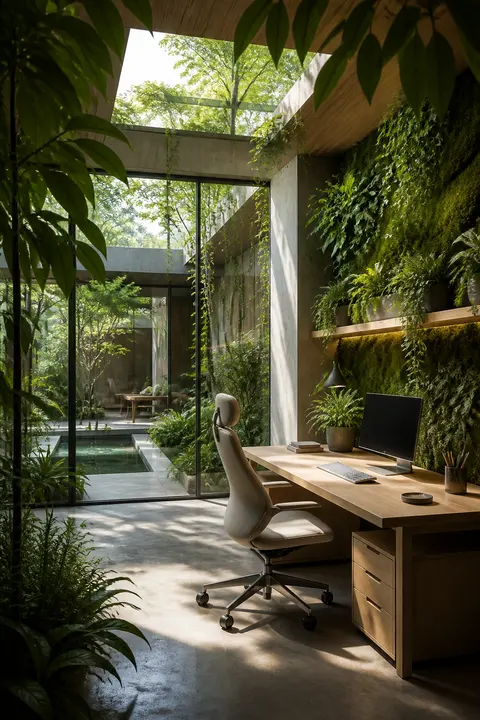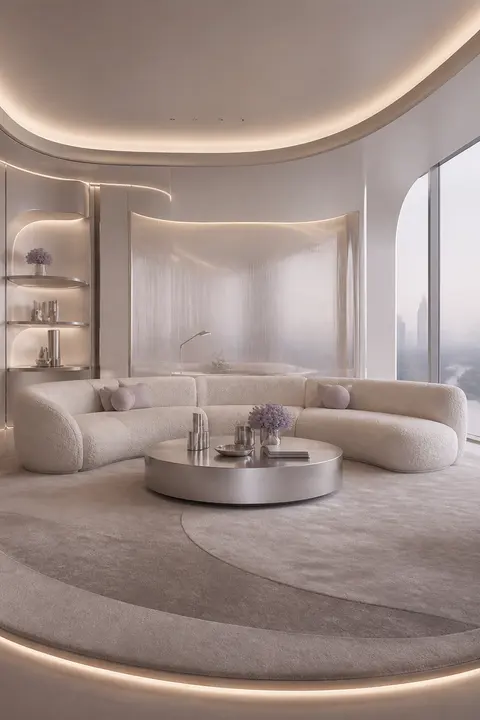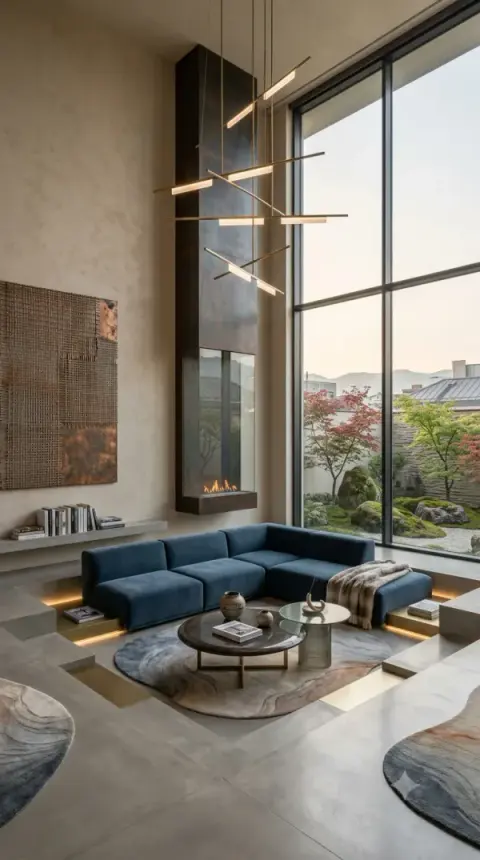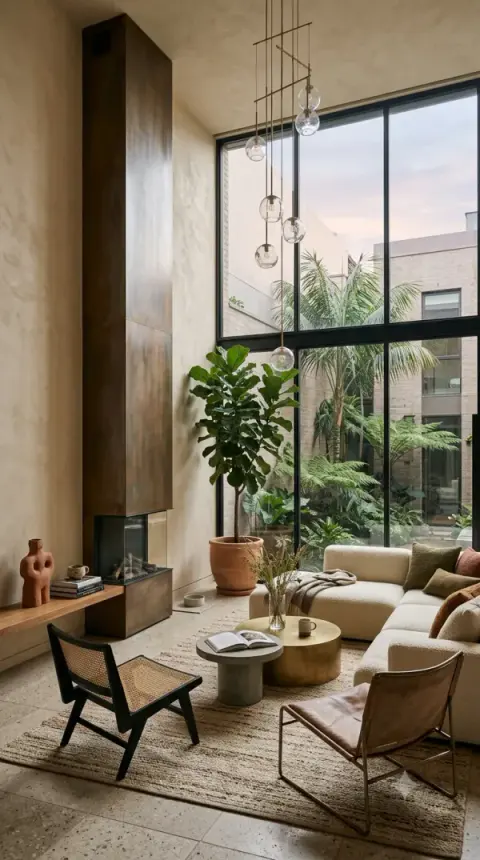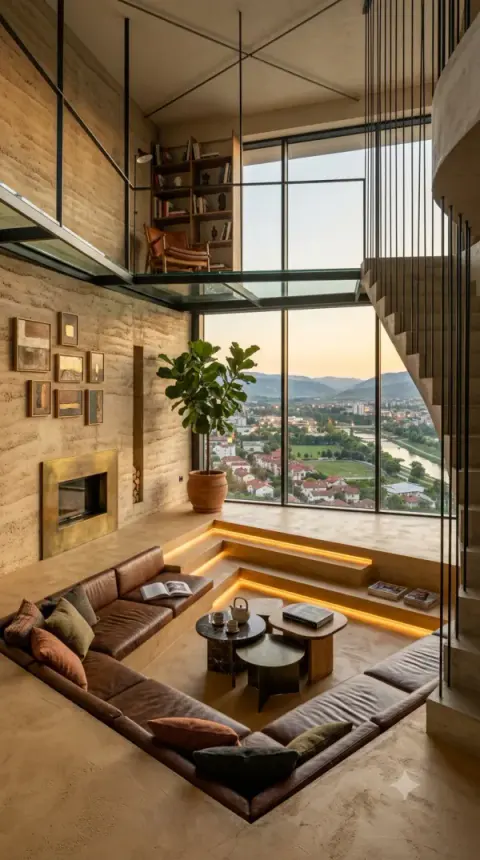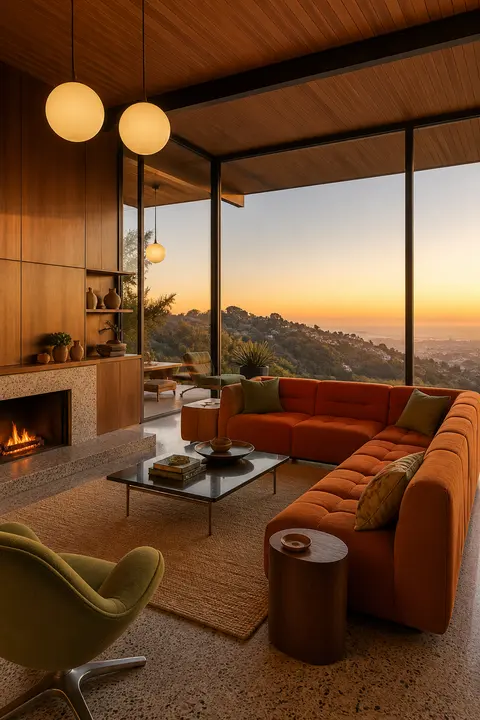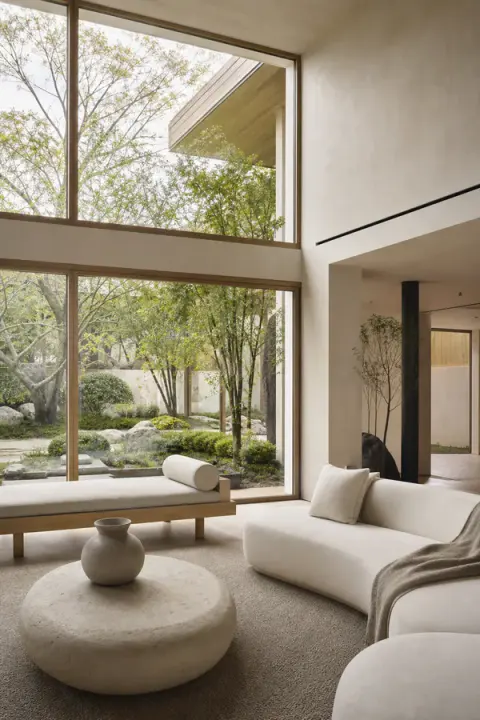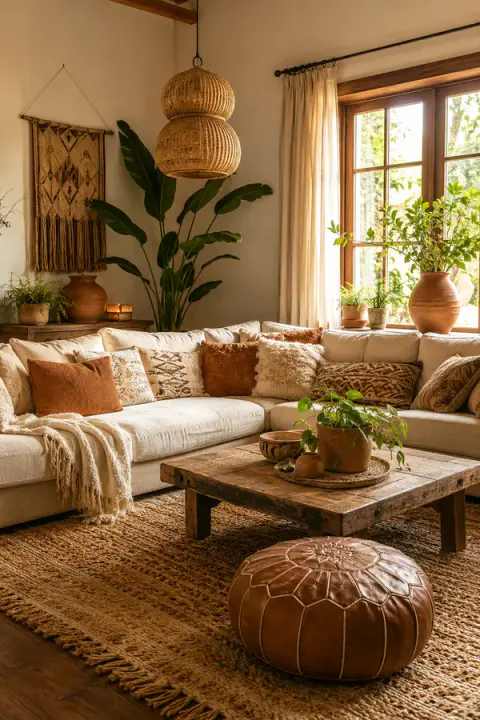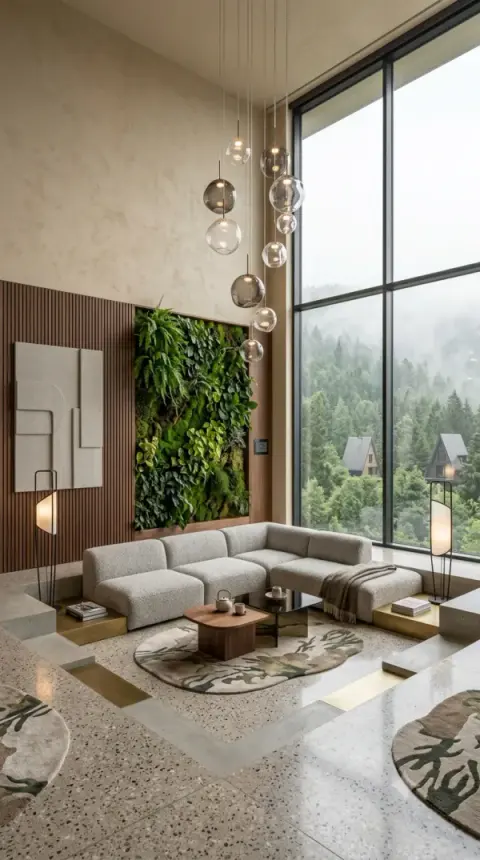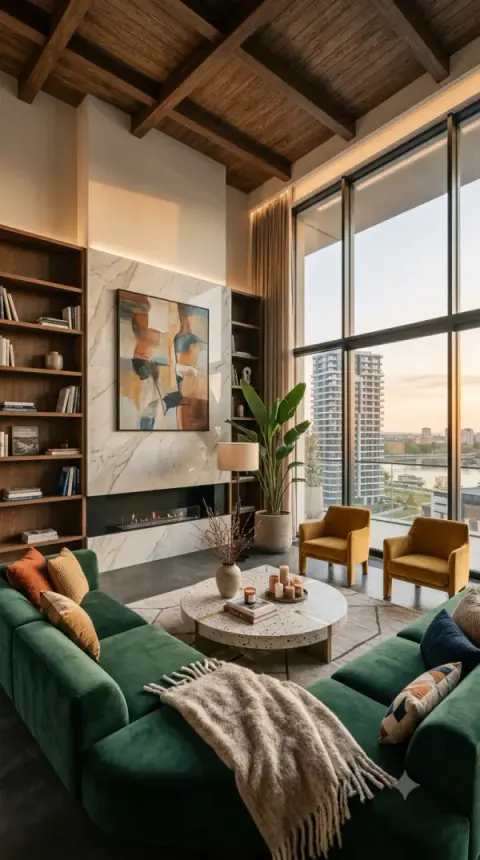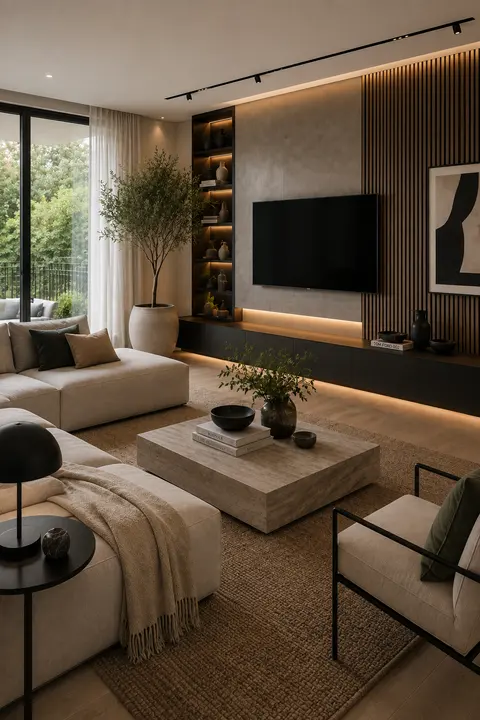
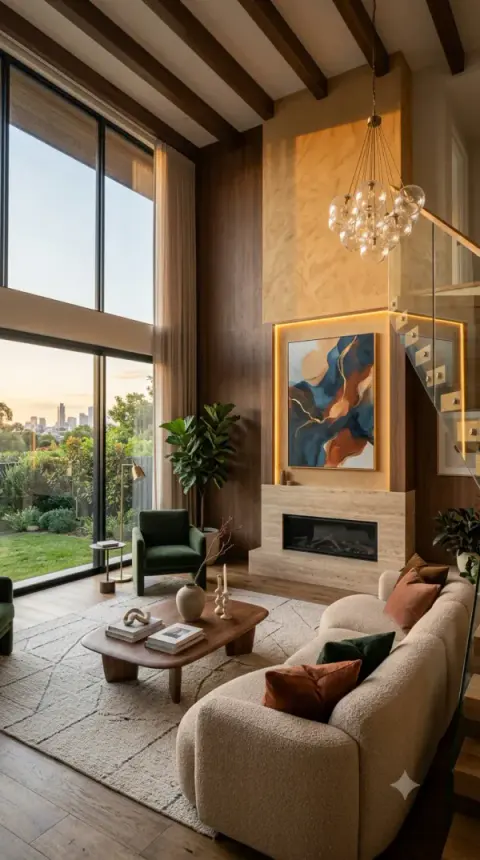
A double-height living room built around a full-wall fluted oak panel, with a linear brass chandelier suspended through the void and a courtyard of olive trees framed by floor-to-ceiling glazing. The fluted panelling is the decision that carries this room. Vertical oak battens run the entire height of the chimney breast, so instead of reading as a blank two-storey wall, the surface picks up light along every ridge and changes tone through the day. It also solves an acoustic problem specific to tall rooms: the broken surface scatters reflections that would otherwise bounce between hard parallel walls and make conversation sound thin. This suits anyone renovating a new-build with a tall entrance volume or a mezzanine, where the ceiling height is generous but the room feels cold and unfinished. It is a common problem in contemporary apartments — the developer supplies the volume, but nothing on the walls gives the eye a reason to travel upward. The palette stays deliberately narrow. Warm greige plaster, pale oak, bone-coloured boucle on the modular sofa, and a single tan leather armchair for contrast. The dusty blue swivel chair is the only saturated colour in the room, which is why it works: in a space this large, one accent reads as intentional, while three or four read as clutter. The low-slung marble side tables and the raw-edge walnut stump keep sightlines under the window line so the glazing is never interrupted. Lighting is handled in two layers. The suspended brass fixture drops slim cylinders at staggered heights to occupy the vertical void — a standard trick for double-height rooms, since a single pendant at ceiling level would leave the middle of the space visually empty. The recessed linear fireplace then anchors everything at seated eye level. Variations worth considering: swap oak battens for walnut if the room faces north and needs warmth, or paint MDF fluting in the same shade as the wall for a quieter, tone-on-tone version at a fraction of the cost. Where a courtyard isn't available, a tall potted olive or ficus lyrata against the glazing achieves the same effect of bringing the outside into the upper half of the room. Best used in open-plan ground floors where the living zone needs definition without walls, and in south-facing rooms where the fluting will actually catch directional light.
Log in to leave a comment.