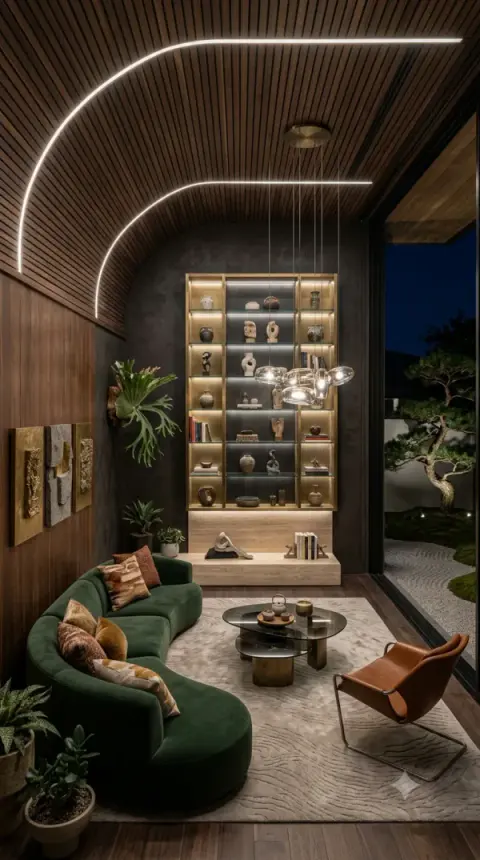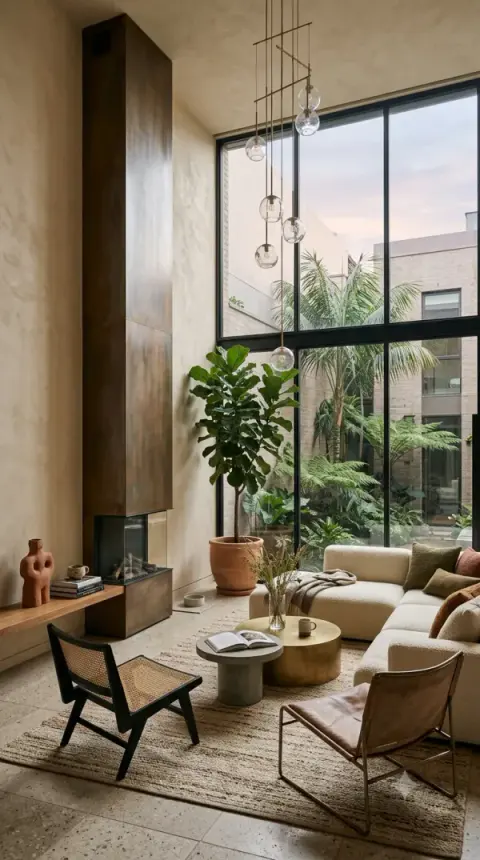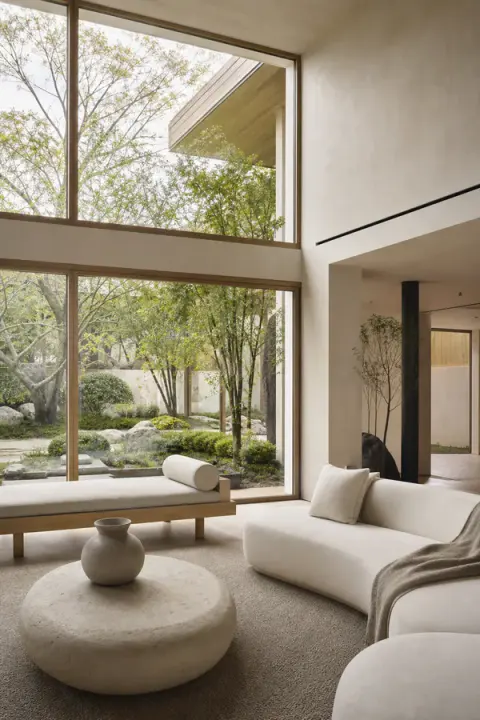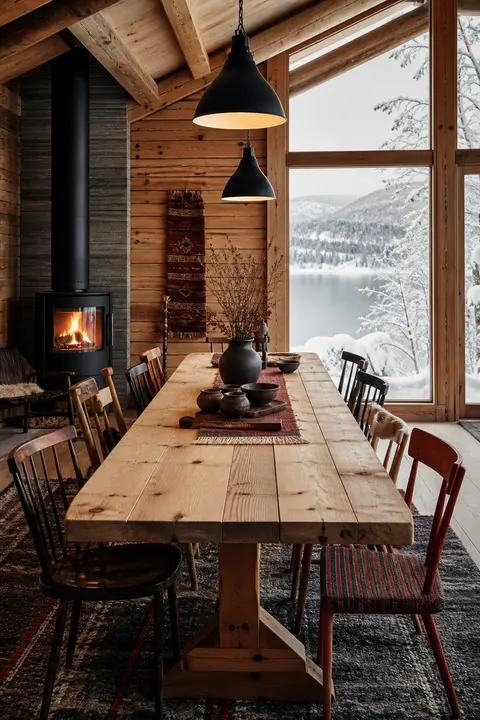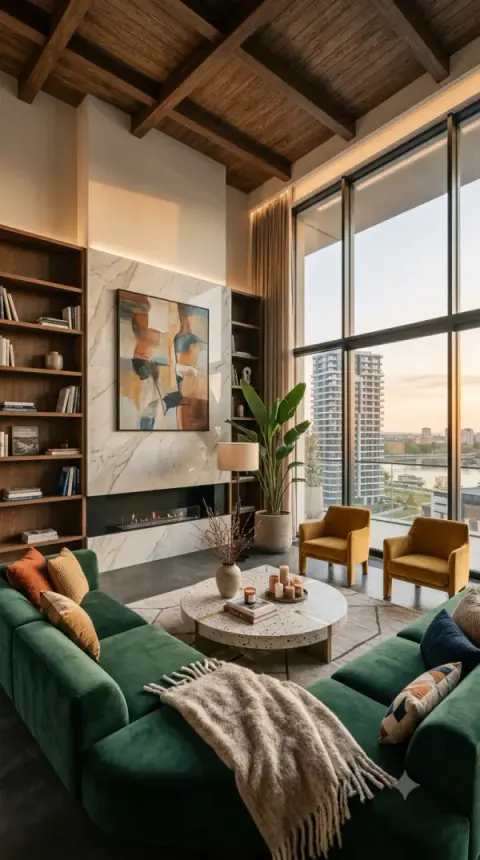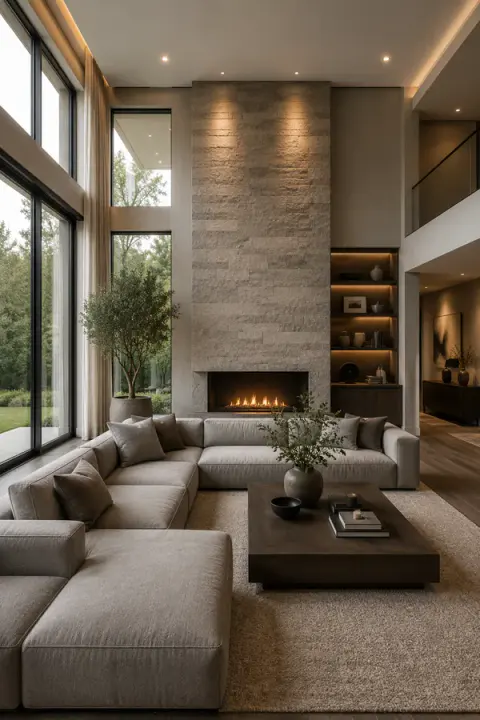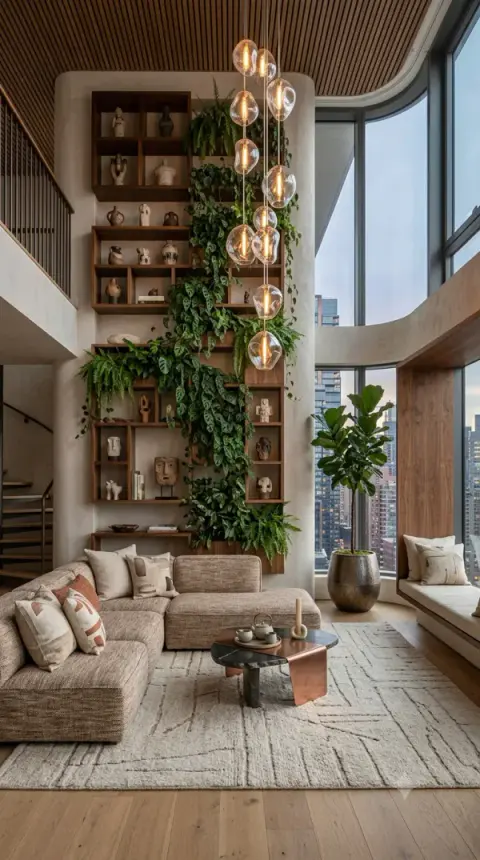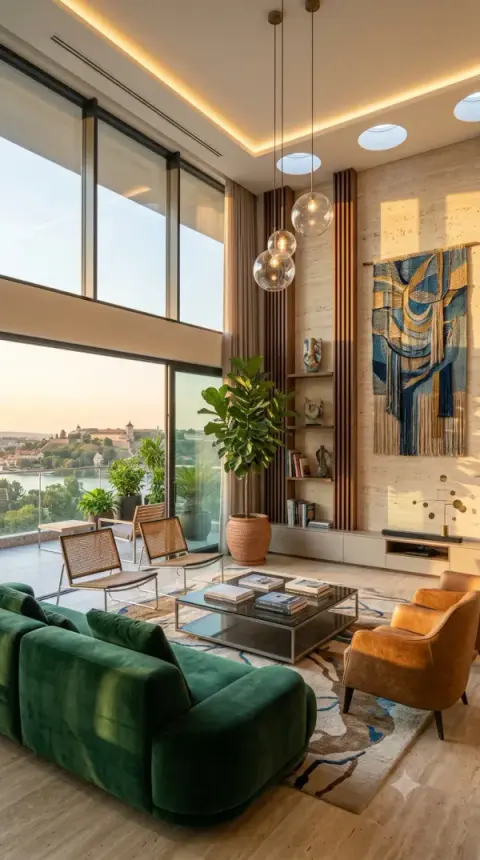
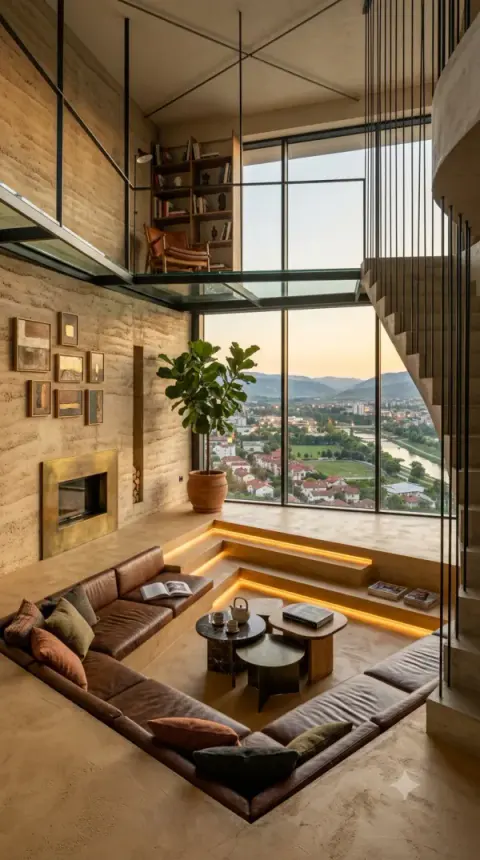
A warm double-height living room with exposed timber beams, a travertine fireplace hearth, a cream boucle sofa, a forest green velvet armchair and a brass bubble chandelier, opening onto a garden with a city skyline at sunset. Exposed beams in a contemporary room are easy to get wrong — the risk is a rustic pastiche. This version avoids it by keeping everything else crisp: the beams are stained dark and left plain with no corbels or decorative joinery, the fireplace is a clean linear burner in a travertine block with no mantel, and the joinery is flat-panelled walnut with a shadow gap rather than moulding. The travertine hearth extends as a wide low bench, which is a detail worth copying. It gives casual perch seating beside the fire, a surface for candles and books, and visual weight at the base of a very tall wall. A fireplace floating in the middle of a two-storey wall with nothing beneath it always looks unresolved. Above the burner, a large abstract canvas in blue, rust and gold sits within a recessed niche lit by concealed LED on all four sides. Backlighting art in a niche is far more effective in a tall room than a picture light, because the glow defines the recess as well as the artwork. The staircase runs behind glass balustrade on the right, with warm LED beneath each tread. Lighting a stair from within the structure keeps the flight legible at night without any visible fittings. This suits family homes on a garden plot with a view — where the room needs to feel warm and used, not styled. Seat depths are generous, the boucle is a practical light beige rather than white, and the low walnut coffee table has rounded ends. Colour comes in small deliberate doses: forest green velvet on a single armchair, rust and olive cushions, and the blue and copper of the canvas. Against cream, walnut and travertine, three accent tones is the upper limit before the room starts to feel busy. Variations: oak beams left natural give a lighter Scandinavian read; limestone instead of travertine cools the palette. Where beams are decorative rather than structural, hollow box sections in the same stain are indistinguishable once installed. Best where the glazing faces west, so the last hour of sunlight crosses the travertine and the beams.
Log in to leave a comment.